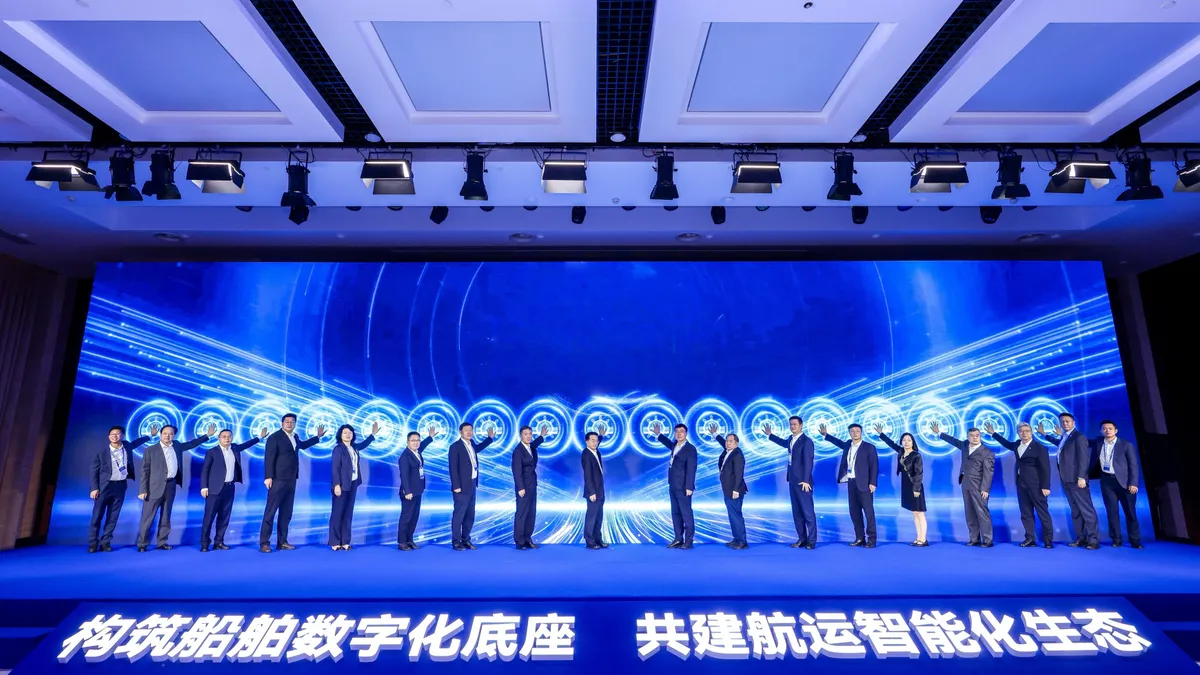
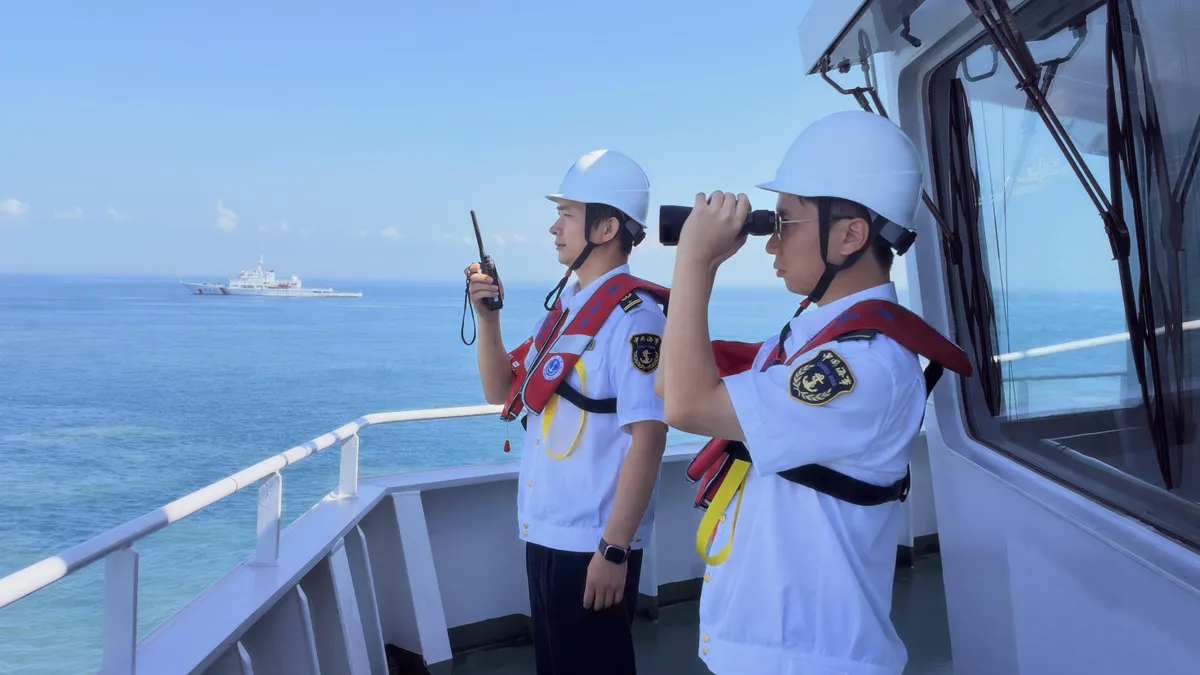
• During the 2026 Qingdao International Shipping Week, CSSC 71 officially released the "Green Shipping Chain AI Integrated Cloud Management Platform" in conjunction with a number of units ". Relying on AI computing power and domestic cloud base, the platform realizes the digital twin of Shandong Shipping's full-volume ships, which can access meteorological and sea condition data in real time and realize the global "one-screen view". The platform breaks through the data barriers of people, machines, things and funds, promotes the management mode from "people staring at the ship" to "data-driven", and integrates intelligent control algorithms to optimize navigation decisions and energy efficiency. At the same time, the platform accurately tracks carbon emissions through the ship dynamics model, helps the green transformation of the fleet, and successfully connects the maritime regulatory system, builds the bottom line of safety, and lays the foundation for building a domestic big data technology ecology.
  • Sinotrans's 2025 annual report showed that the company achieved operating income of 96.81 billion billion yuan, down 8.3 percent from the same period last year, and net profit attributable to its parent was 4.022 billion billion yuan, up 2.7 percent from the same period last year. Despite the decline in net profit and operating cash flow, the company showed structural highlights in contract logistics, shipping agency and overseas operations. Contract logistics grew strongly in the fields of consumer goods, automobiles and new energy, the business volume of shipping agents remained stable, and the overseas business showed outstanding profits in Southeast Asia and the Middle East.
  • According to the report of the European Federation of transport and environment, the war between the United States, Iraq and the United States has led to a sharp rise in the cost of global shipping fuel, and the cumulative additional expenditure has exceeded 4.6 billion euro. The surge in fuel prices highlights the industry's dependence on fossil fuels and its vulnerability, while also providing an opportunity to accelerate the industry's transition to electrification and efficient operations. The report argues that the current crisis may weaken the cost resistance of green shipping measures and promote changes in the energy structure.
  • From January to February this year, China's transportation economy has achieved a good start. The national transportation fixed asset investment completed 355.8 billion yuan, maintaining a high level of operation; the commercial freight volume reached 8.3 billion tons, a year-on-year increase of 6.5; the cross-regional personnel flow of the whole society 12.38 billion person-times, a year-on-year increase of 0.7. The main indicators of freight are growing well, the throughput of port cargo and containers is growing rapidly, and the throughput of foreign trade containers shows strong toughness, with a year-on-year increase of 13.7. In terms of passenger transport, railway, civil aviation, highway and waterway passenger traffic all achieved year-on-year growth, and the integrated transportation network effectively ensured the smooth flow of logistics and travel demand.
  • Fujian Province announced the first batch of phased landmark achievements of the cross-strait integration development demonstration zone, including the initial formation of a policy system, the implementation of 206 key projects with a total investment of more than 1.3 trillion yuan, and the solid promotion of Xiamen Jinfu's "same city life circle. The achievements cover economic and trade facilitation, infrastructure connectivity, agricultural cooperation, service innovation for Taiwan compatriots and cultural exchanges, reflecting the substantial progress made by cross-strait integration in policy support, project implementation and people's livelihood and well-being.
  • Hubei launched the "Thousand Sails Plan" on March 26, aiming to promote the green and intelligent transformation of inland river shipping. The plan aims to build, transform and update 1000 new energy ships by 2030, expand more than 10 green demonstration routes, and realize independent control of core technologies. With its strong research and development strength and the advantages of the whole industry chain, Hubei will integrate resources to tackle key technologies, lay out charging and changing facilities, build a new energy ship operation system, and lead the development of China's inland river green intelligent ship industry.
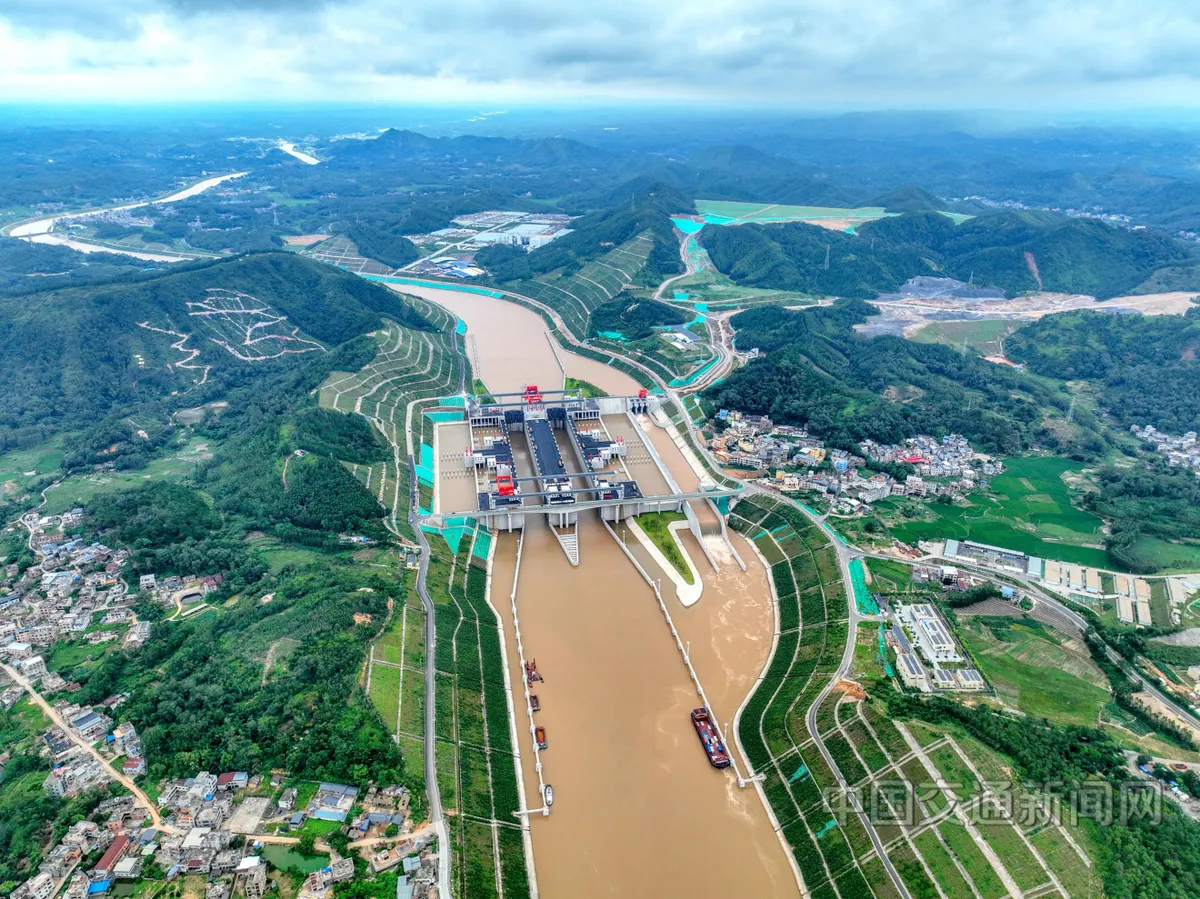
  • The three major hubs of the Pinglu Canal (Youth, Madao, and Qishi) have all completed power transmission, marking that the project has officially entered the stage of joint commissioning and joint test of ship lock equipment. Guangxi Qinzhou Power Supply Bureau of China Southern Power Grid has ensured that the power transmission time of each hub is at least 10 days ahead of the original plan through advanced service, simplified process and innovative mechanism, providing a solid power guarantee for the trial operation of canal navigation.
  • On March 22, Guangxi Guiping Hongxin Shipbuilding Co., Ltd. held a green intelligent ship commencement ceremony and signed contracts with three enterprises to build 19 new energy ships, with a total investment of more than 0.3 billion yuan. These ships, including methanol power, pure electric power and LNG hybrid power, are the first batch of similar ships in Guangxi, marking an important step in the green transformation of Guangxi inland river shipping. The move responds to the national "double carbon" strategy, aims to promote the green and low-carbon development of the Xijiang Golden Waterway, and help the "Guiping Shipbuilding" brand to be green and intelligent.
  • On March 20, 2025, the Ministry of Transport held a ministerial meeting to thoroughly study and implement the spirit of General Secretary Xi Jinping's important speech and related meetings, and deploy implementation measures. The meeting focused on the work of 2025 and the key points of 2026 for reducing costs and improving quality and efficiency of transportation logistics, and deliberated the "Rules for the Administration of Civil Aviation Air Traffic Control Licenses". The meeting stressed the need to reduce the logistics cost of the whole society with the development of multimodal transport as the core, cultivate international competitive enterprises, promote the integration of transportation logistics and industry, develop new formats such as network freight and low-altitude logistics, and expand diversified international transportation channels. At the same time, the meeting also called for standardizing the management of air traffic control personnel license and promoting the safe development of the industry.
  • Xiamen has been selected as a pilot city for the national cross-border trade facilitation special action for five consecutive years, demonstrating its continued leading position in optimizing the port business environment. The article points out that through the integrated reform and innovation of the pilot free trade zone, Xiamen has jointly promoted 258 facilitation tasks with customs, commerce and other departments, built a national leading digital port platform and a "single window" for international trade, and significantly reduced the cost of enterprises. These measures have helped Xiamen's foreign trade scale continue to rise. In 2025, the total value of imports and exports hit a record high, and promoted Xiamen to move from a "big foreign trade city" to a "strong foreign trade city.
  • In February 2026, the container throughput of the ports of Los Angeles and Long Beach on the west coast of the United States remained stable, reaching 824000 TEU and 768000 TEU respectively, with a slight year-on-year increase. However, port executives noted that global events such as conflicts in the Middle East and changes in U.S. tariff policy are creating significant uncertainty in the supply chain. Although the flow of goods is currently not directly disturbed, higher oil prices and potential route adjustments may push up transportation costs and affect global trade. The two major ports emphasize their stability as strategic hubs while keeping a close eye on external risks.
  • The Secretary-General of the International Maritime Organization Dominguez pointed out that naval escort is not a sustainable solution to the crisis in the Strait of Hormuz, and real security depends on the end of the conflict. The Council of the organization recommended emergency temporary measures such as the establishment of a maritime safety corridor to evacuate merchant ships in a peaceful manner. Statistics show that recent attacks in the region have caused casualties to seafarers, with about 20,000 seafarers still stranded in the Persian Gulf.
  • On March 18, 2026, the shipping trade digital intelligence conference with the theme of "smart navigation trade, digital creation of the future" was held in Shanghai. The conference was co-sponsored by industry authorities and brought together more than 500 representatives from around the world to discuss the path of digital transformation of shipping trade. The meeting focused on standard building, collaborative innovation, data security and ecological co-construction, and released important cooperation results such as promoting the application of electronic bills of lading, aiming to inject digital momentum into the high-quality development of global trade.
  • Guangzhou port Nansha grain general terminal loading and unloading system of the whole process automation upgrade project recently high-quality through the traffic power special pilot acceptance. As the only selected pilot in Guangdong Province, the project has realized the intelligent operation of the whole process from single-machine automation to multi-machine cooperation in bulk grain terminals through the transformation of localization automation. The production efficiency has been increased by 20%, and the labor cost has been reduced by about 79%, thus forming the "Guangzhou Experience" of port intelligent transformation that can be replicated and promoted ".
  • This report analyzes the capacity status of inter-provincial freight vessels along the coast of China in 2025. According to the report, the total capacity of dry bulk carriers decreased slightly by 0.3 per cent, the capacity of container ships increased by 3.0 per cent, and the capacity of oil vessels in liquid dangerous goods vessels decreased while the capacity of chemical and liquefied gas vessels increased. The average age of various types of ships generally does not change much, but the composition of old and special inspection ships varies among different ship types, reflecting the dynamics of market capacity structure adjustment and fleet renewal.
CNAUTO TDD-global