Trillion-dollar market accelerating into shape! What can an "energy island" change?
In March this year, the "Outline of the 15th Five-Year Plan for National Economic and Social Development of the People's Republic of China" was released, and new energy remains in an important position. Unlike previous plans, this Five-Year Plan has, for the first time, focused on the development of deep-sea offshore wind power. Against the backdrop of onshore new energy development entering a "red ocean," the next "blue ocean" for new energy—offshore green energy islands—is rapidly taking shape.
Deep-sea offshore wind power is not just about electricity generation
Seventy-one percent of the Earth's surface is ocean, and 65% of wind energy resources are located in deep-sea areas. In China alone, the technically exploitable deep-sea wind energy resources amount to approximately 1.23 billion kilowatts, equivalent to the combined current installed power capacity of Inner Mongolia, Xinjiang, Gansu, Shandong, and Jiangsu—five major power-producing provinces. Meanwhile, nearshore wind resource development has reached saturation, making the move toward deep-sea areas an inevitable trend.
However, constrained by both economic and technical challenges, the current utilization rate of deep-sea offshore wind power resources is less than 0.5%. High costs, construction difficulties, and maintenance challenges are the "three mountains" standing in the way of deep-sea offshore wind power development.
With the rapid rise of low-carbon shipping fuels such as LNG (liquefied natural gas), biodiesel, and green methanol, hydrogen, ammonia, and alcohol are no longer merely chemical raw materials but have acquired energy attributes, entering the market with a new positioning as "hydrogen-based energy." The green and diversified development of energy provides a novel solution to the challenge of utilizing deep-sea offshore wind power—the Power-to-X (PtX) approach: using offshore platforms to convert deep-sea wind power into hydrogen, ammonia, and alcohol through water electrolysis, thereby avoiding the high costs and technical bottlenecks of long-distance subsea cable transmission.
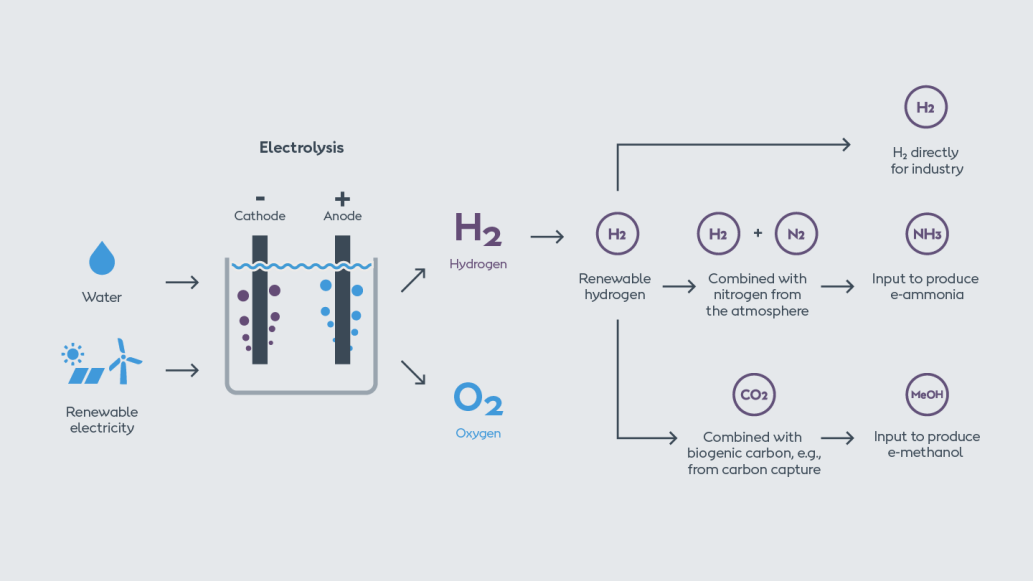
Of course, converting electricity to hydrogen involves significant energy losses, and further conversion to ammonia or alcohol results in even greater losses. From an energy efficiency perspective, the overall efficiency of PtX is 50% to 55%, whereas the comprehensive loss of transmitting deep-sea wind power to shore via flexible direct current is only 5% to 10% over distances of hundreds of kilometers. However, in the economic calculus of offshore wind power development, energy utilization efficiency is not the sole factor. When considering the coastal demand for transmitted power and the costs of grid integration, bringing deep-sea electricity to shore becomes less economically viable. At the same time, producing hydrogen-based energy directly offshore enables long-term energy storage and long-distance transportation, which becomes increasingly cost-effective as the distance from shore increases. More importantly, with the global transition to green and low-carbon energy, high-emission industries such as chemicals and shipping are seeking green alternatives, creating new demand for green hydrogen-based energy. Converting deep-sea green electricity into hydrogen-based energy can generate greater market value than simply transmitting electricity to shore.
It is foreseeable that offshore production platforms that use wind power to produce green hydrogen-based energy will become future centers for energy conversion, storage, and transportation—offshore green energy islands.
Technology and standards drive engineering applications
When discussing implementation timelines, technological breakthroughs are the primary hurdle.
The first challenge to overcome is the development of deep-sea offshore wind power, with solutions clearly pointing to large-capacity, low-cost floating wind turbines. From the commissioning of China's first deep-sea floating wind power platform, "Haiyou Guanlan," located 136 kilometers offshore in May 2023, to the installation of the world's largest single-unit floating wind power platform, the 16-megawatt "Three Gorges Navigator," in Yangjiang, Guangdong, in May 2026, China's floating wind power development is steadily transitioning from technological research and development to commercial application. However, economic viability remains a bottleneck, as the cost of floating offshore wind power is still more than twice that of fixed installations. Preliminary estimates suggest that offshore wind farms account for 66% of the total capital cost of centralized offshore ammonia production. Overcoming the cost barrier to make floating wind power economically competitive is a prerequisite for the commercialization of offshore green energy islands.
After solving the wind power development issue, avoiding the challenges of laying subsea cables means facing the challenges of "building factories offshore." Supported by mature technologies for offshore production platforms such as FPSO (Floating Production Storage and Offloading) and FLNG (Floating Liquefied Natural Gas), constructing offshore green energy islands is more about transferring existing expertise. However, in terms of offshore hydrogen-based energy production technologies, while land-based green hydrogen, ammonia, and alcohol production pathways have been established, the more complex offshore production environment means the technology is still transitioning from experimental to engineering breakthroughs.
The industry's focus is concentrated on two directions: first, the seawater hydrogen production process, with an emphasis on overcoming technical challenges such as high salinity, high corrosion, and the tendency for side reactions; second, integrated offshore production to promote industrial applications. In these two areas, industry leaders and academic institutions have already begun pilot projects, with results transitioning from laboratories to engineering sites.
In March 2025, China's first integrated offshore hydrogen, ammonia, and alcohol project, led by the State Energy Group, one of the country's five major power companies, was launched. This project uses floating photovoltaic power to produce hydrogen, ammonia, and alcohol on offshore platforms fixed to the seabed, initially establishing the entire technical chain for producing hydrogen-based energy from renewable resources offshore. In December of the same year, Dongfang Electric Group announced that its floating wind power platform integrated with direct seawater hydrogen production had received a principle approval certificate from the China Classification Society, enabling hydrogen production without seawater desalination and making the process more efficient. A team from Hainan University also developed a prototype for extracting hydrogen and magnesium from natural seawater, capable of stably producing hydrogen while recovering magnesium resources. Central enterprises such as SPIC and CGN are also collaborating with top research teams to develop direct seawater hydrogen production technology.
In March 2026, a seawater direct hydrogen production factory research project led by Sinopec's Qingdao Refining Company reached an installed capacity of hundreds of kilowatts, achieving industrial demonstration standards. In June 2026, CNOOC Engineering announced the completion of a demonstration simulation test for offshore PEM (Proton Exchange Membrane) hydrogen production equipment, capable of withstanding typhoon conditions of up to 17 levels. In the same month, China Merchants Group, through its subsidiary Huashang Energy, completed a seawater-adapted test of an alkaline water electrolysis hydrogen production prototype for its offshore wind power flexible hydrogen production and ammonia synthesis project. The prototype operated stably under common motions such as rolling, pitching, and heaving, and even maintained structural integrity, leak-proofing, and functionality when the platform tilted up to 20 degrees. The project's preliminary design has been completed, and it is now entering detailed design and engineering implementation stages.
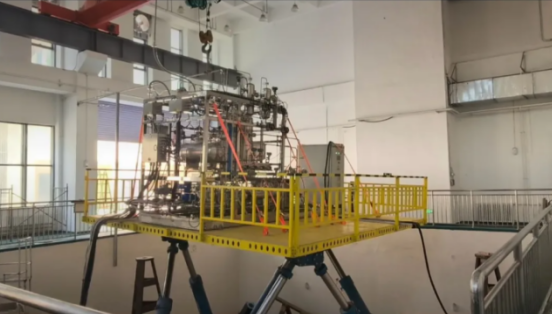
Overall, offshore wind power technology for producing green hydrogen-based energy is becoming more efficient in hydrogen production pathways, scaling up from laboratory to hundreds of kilowatts and even megawatts, and transitioning from fixed to floating production platforms. The pace of development is accelerating toward engineering-scale demonstrations.
Meanwhile, regulatory compliance systems are advancing in parallel. As deep-sea offshore wind power becomes a key focus of the "15th Five-Year Plan" for new energy infrastructure, coastal provinces such as Fujian, Guangdong, Jiangsu, Shandong, and Hainan have incorporated deep-sea offshore wind power development and offshore hydrogen, ammonia, and alcohol production into their respective plans. The China Classification Society, as the "gatekeeper" of offshore facility safety, introduced the "Guidelines for Offshore Floating Wind Turbine Platforms" as early as 2021 and released the "Guidelines for Offshore Hydrogen Production Facilities" in September 2025, filling the gap in domestic offshore hydrogen production standards and providing critical compliance references for producing green ammonia and alcohol offshore.
Industry chain collaboration accelerates the breakthrough of commercial models
Green energy has the characteristics of a bulk commodity, and economies of scale are paramount. Currently, producing 300 tons of ammonia per day, equivalent to an annual capacity of nearly 100,000 tons, is necessary to highlight the advantages of deep-sea offshore wind power for ammonia production. Stimulating initial demand and achieving economies of scale as soon as possible are of utmost importance. The wind power, chemical equipment, and offshore equipment industries are closely linked to the development of green energy islands, and how leading companies leverage their strengths to build viable business models is a critical question.
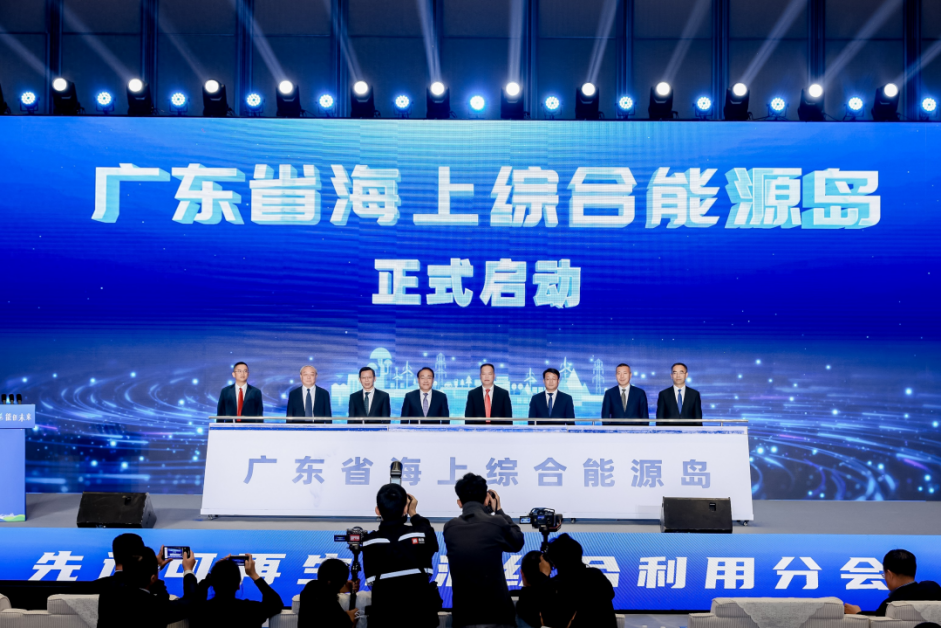
Currently, leading domestic companies and coastal local governments are taking proactive steps. In November 2024, CGN Group led the establishment of China's first offshore integrated energy island innovation platform, covering all stages from technology research and development to demonstration projects. In February 2025, Yancheng City and Envision Energy announced a strategic partnership to jointly explore the construction of offshore "energy islands." In December 2025, Shenzhen Port Group and CGN New Energy announced a collaboration to promote a series of benchmark projects, including offshore wind power bases, offshore integrated energy islands, wind power operation and maintenance mother ports, and a green marine fuel refueling and trading center in South China. By the end of June 2026, Zhuhai City released an investment opportunity list at the "New Offshore Infrastructure" themed summit, with offshore integrated energy islands prominently featured. Signals of cooperation in the field of offshore green energy islands are continuously emerging, and the exploration of commercial models is accelerating.
Downstream demand unlocks a trillion-yuan global market
China's exploitable deep-sea wind power resources amount to approximately 1.23 billion kilowatts. If 50% is developed, based on current investment estimates, offshore green energy islands could drive 25 trillion yuan in investment and further unlock incremental market opportunities across the entire industry chain.
Upstream, China's future exports will not only include core hardware such as floating wind power platforms and seawater hydrogen production equipment but also comprehensive "offshore green energy island" solutions and EPC contracting services. Midstream, specialized transport fleets for liquid ammonia and alcohol, serving as key hubs connecting offshore production with onshore consumption, represent a promising ship investment market. Downstream, the market demand for green hydrogen-based energy is directly driven by the green transition pressures of traditional high-carbon industries both domestically and internationally.
From an international perspective, the International Maritime Organization (IMO) continues to tighten carbon reduction targets, making alcohol and ammonia fuels the preferred low-carbon and zero-carbon fuels for ocean-going vessels. By 2030, the combined demand for ammonia and alcohol as green shipping fuels is expected to reach 59 million tons. In the steel and metallurgy sector, green hydrogen can replace coke as a reducing agent, reducing carbon emissions by over 60% compared to traditional blast furnaces. After the EU's Carbon Border Adjustment Mechanism (CBAM) expands its industry scope in 2028, the annual demand for green high-end steel in industries such as automotive and home appliances will exceed 13 million tons.
Domestically, China's ammonia synthesis industry is itself a major carbon emitter. Green ammonia can directly replace traditional gray ammonia, achieving zero-carbon production. In 2024, the National Development and Reform Commission and the National Energy Administration issued the "Coal Power Low-Carbon Retrofit Action Plan (2024–2027)," explicitly requiring retrofitted coal power units to have the capability to co-fire more than 10% green ammonia. It is estimated that if 80% of China's coal-fired power plants adopt the 10% green ammonia co-firing plan, it will stimulate demand for over 200 million tons of green ammonia, exceeding the current global annual consumption of synthetic ammonia. Additionally, domestic exploration of methanol-hydrogen electric heavy trucks and inland methanol-powered vessels is creating more market opportunities for green methanol.
Driven by the multidimensional value of equipment investment, solution exports, and downstream applications, China's offshore green energy island industry is poised to climb to the upper reaches of the global value chain, with the trillion-yuan market extending from the domestic to the global green energy market.
Pioneers are already on the move. The trillion-yuan market of offshore green energy islands is expected to reach a breakthrough moment in commercial development within the next two years.
-
China has established a new channel in the southwestern region connecting inland areas to the sea.3159
-
China Merchants Group's intelligent ships make new moves.4493
-
The 9th International Diving and Offshore Exhibition Opens in Qingdao This November4929
-
The nation's first emergency drill for a biofuel spill was held at Tangshan's Jingtang Port.3430
-
Trillion-dollar market accelerating into shape! What can an "energy island" change?3643