The vast bay connects two shores, the thriving port links four seas—Meizhou Bay Port's transformation activates the "blue engine" of Southeast China's coast.
Located at the junction of the Yangtze River Delta and Pearl River Delta economic zones, connecting both sides of the Taiwan Strait and handling bulk cargo, Meizhou Bay Port shines like a dazzling pearl along the southeast coast.
In 2009, with the integration of Fujian Province's port resources, Meizhou Bay Port came into being. By 2015, during a new round of port system adjustments in Fujian Province, Meizhou Bay Port completed the optimization and integration of its port areas, forming a development pattern of "two sides, three bays, five areas" that spans both sides of Putian and Quanzhou, covers three bay areas, and includes five major port areas.
Looking back over a century, since Dr. Sun Yat-sen mentioned the construction of Meizhou Port in his "Outline of National Reconstruction" in 1921, the century-old dream of a major port in Meizhou Bay has become a reality. In 2021, the cargo throughput of Meizhou Bay Port exceeded 100 million tons for the first time, officially joining the ranks of "100-million-ton ports." By 2025, Meizhou Bay Port is expected to achieve a cargo throughput of over 135 million tons.
From "bay" to "port," from "fishing port" to "commercial port," and from "small port" to "large port," Meizhou Bay Port has thrived through continuous efforts, accelerating its transformation.
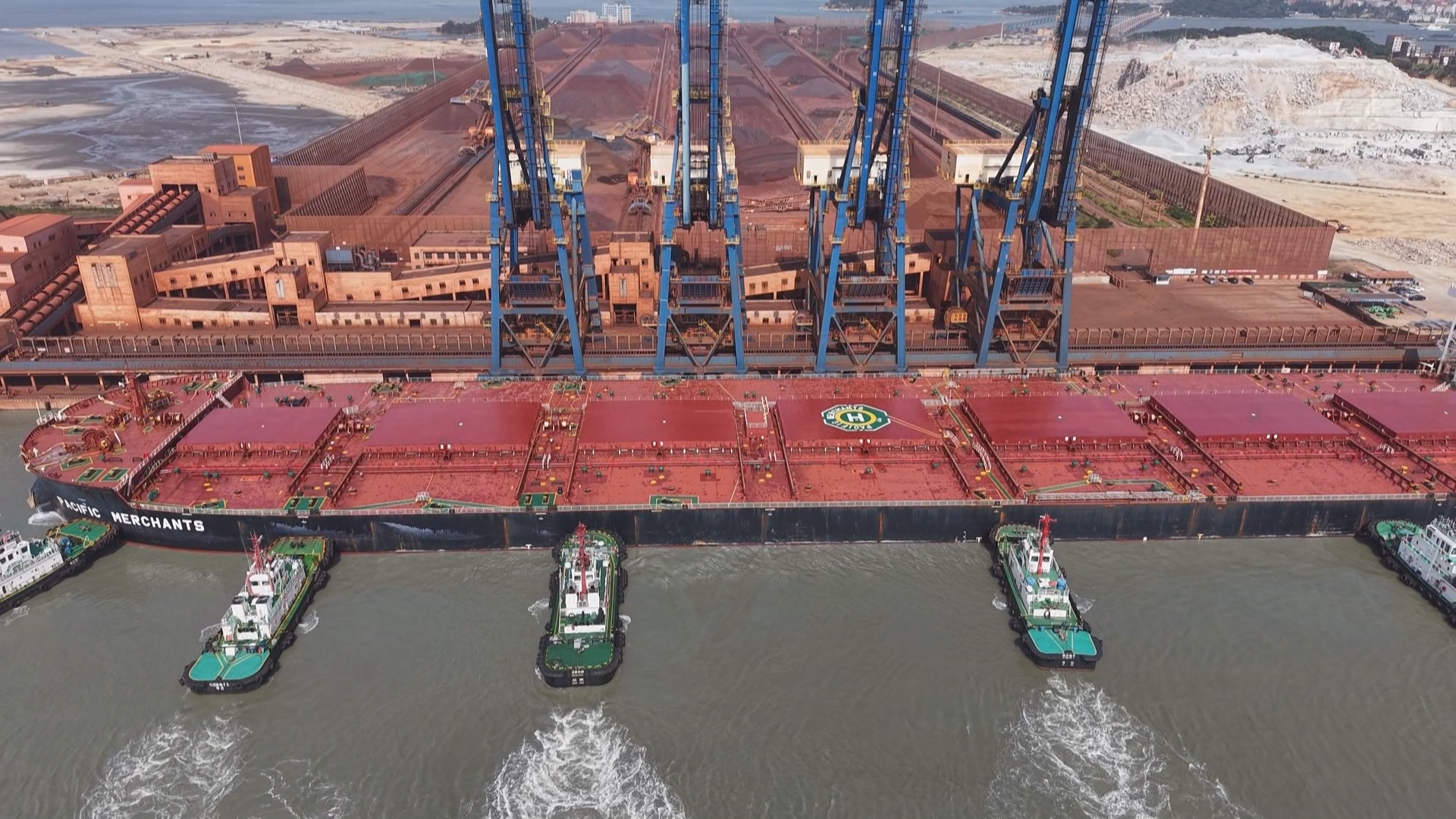
The capacity of the port hub continues to improve
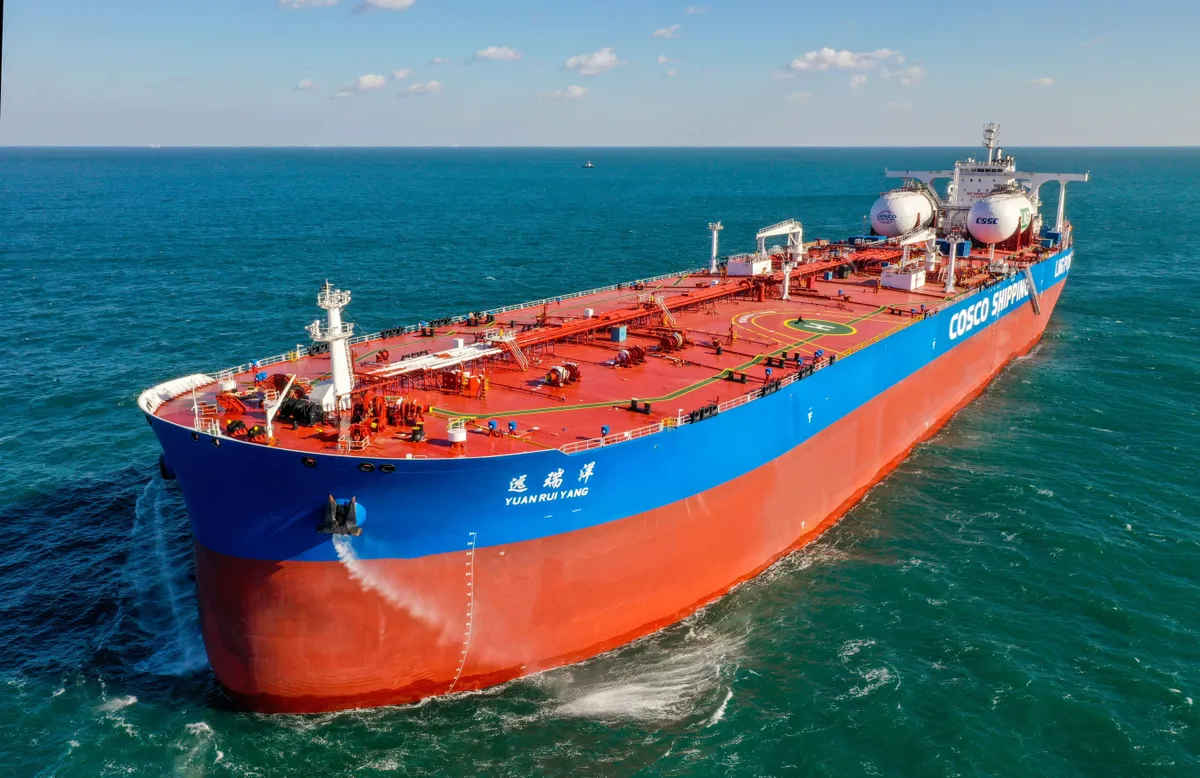
In May 2021, the 400,000-ton vessel "Yuan Fu Hai" docked at berth No. 9 in the Luoyu Port Area of Dongwu Port for the first time, marking the official commissioning of Fujian's first and the nation's sixth port capable of accommodating 400,000-ton ore ships. Meizhou Bay Port officially entered the "era of large ships" for dry bulk cargo operations.
"As of 2025, Meizhou Bay Port has utilized 14.5 kilometers of terminal shoreline, built 32 berths of 10,000 tons or more, and extended the total length of its navigation channels to 128 kilometers," said a representative from the Fujian Meizhou Bay Port Development Center.
Since the beginning of this year, the pace of 400,000-ton vessels docking at Meizhou Bay Port has continued to accelerate. As of August, 16 such vessels had docked, surpassing the total number for the entire previous year. From sporadic docking of giant ships to frequent arrivals and departures, Meizhou Bay Port has handled nearly 70 400,000-ton giant ships since 2021, showcasing its strength as a "port for giant ships."
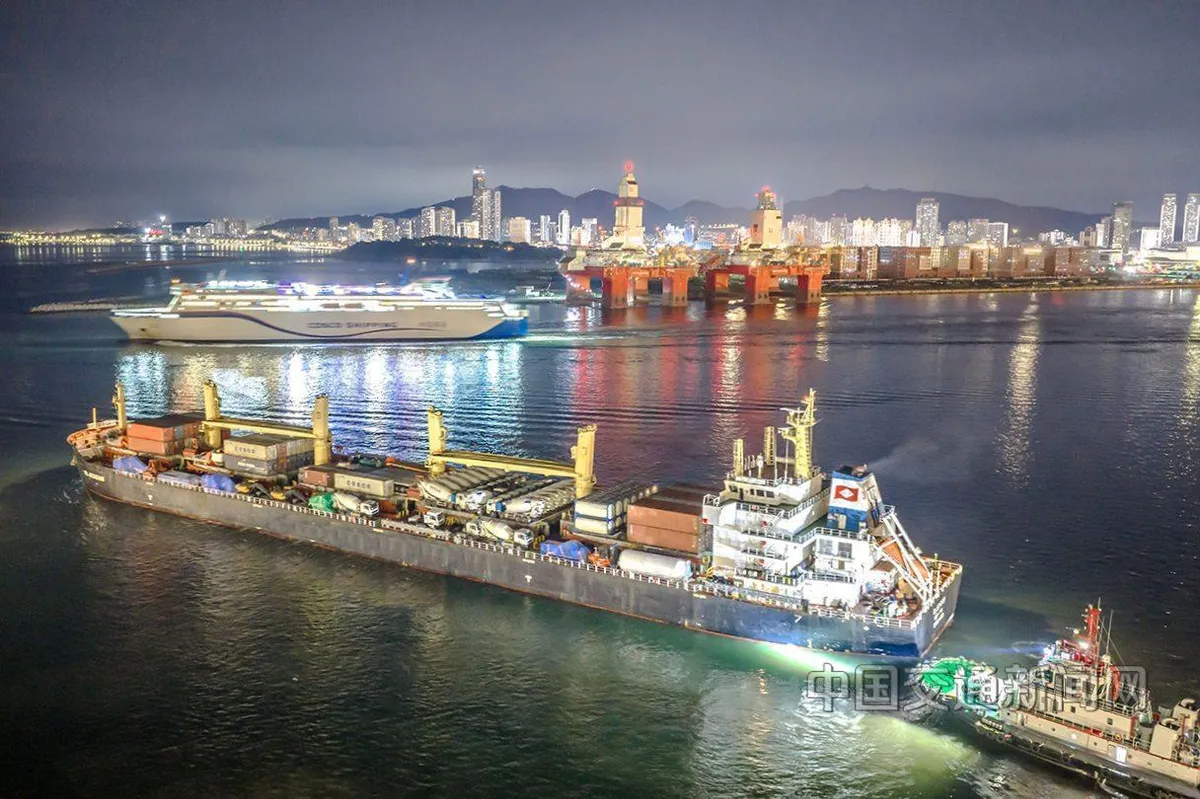
A modern and strong port requires not only berths, channels, and other hard infrastructure but also high-quality port services. With the successful implementation of nighttime pilotage for 100,000-ton bulk cargo ships in the Luoyu operation area, the operating hours for large vessels in Meizhou Bay's core dry bulk cargo port area have been significantly extended, achieving a substantial breakthrough in port navigation support capabilities.
On July 27, the Fujian Meizhou Bay Port Development Center, in collaboration with seven joint inspection units at the port, including border inspection, customs, and maritime authorities, jointly issued the "Meizhou Bay Port Crew Shore Leave Service Guide" and the "'Mei' Good Harbor · Warm Station Guidebook." Crew members can follow the guidebook to complete all procedures at once, achieving a "one-stop, one-time" process for shore leave formalities.
In the terminal operation area and warm stations, ocean-going crew members who have just completed their shifts can sit down to rest, drink water, recharge, and have a simple meal. Seven units have integrated resources from the terminal party and staff service centers and truck driver stations, addressing the pain points of crew members' difficulties in going ashore while also taking care of the livelihood needs of truck drivers in the port area.
The port is a fundamental and pivotal facility, serving as an important support for economic development. During the "14th Five-Year Plan" period, the Dongwu Port Area of Meizhou Bay Port has risen to become the largest dry bulk cargo operation port area in Fujian Province; the Xiuyu Port Area has been established as the largest ammonium sulfate distribution base in southern China; and the liquid chemical industry advantages of Xiaocuo and Douwei Port Areas have been continuously amplified. Fujian's first public bonded crude oil storage facility and the first public liquefied hydrocarbon terminal have been put into operation and opened to the public.
From January to July this year, Meizhou Bay Port's iron ore throughput totaled 15.98 million tons, with the operational quality and efficiency of core dry bulk cargo types steadily improving. As of August, the coal throughput at Meizhou Bay Port had exceeded 30 million tons, continuously enhancing the port's energy supply hub efficiency.
With the expansion of berths and channels and the improvement of port services, Meizhou Bay Port is making concerted efforts to build a "Silk Road Maritime" hub, continuously strengthening its position as a major bulk cargo hub port in Southeast China.
Efficient and smooth land-sea intermodal transport corridors
On July 15, the Liberian-flagged foreign trade vessel "Manos" docked at berth No. 10 in the Dongwu operation area, carrying 76,000 tons of coal. After unloading, the coal was directly loaded onto trains and transported to Yong'an City, Sanming, Fujian Province. This was a vivid example of the efficient operation of land-sea intermodal transport at Meizhou Bay Port.
In recent years, Meizhou Bay Port has driven the smooth operation of land-sea intermodal transport through a dual-engine approach of water-to-water transshipment and sea-rail intermodal transport.
The port connects to the world, and the roads link to all directions. Relying on a well-developed collection and distribution network, Meizhou Bay Port integrates highways, pipelines, and railways to build a collection and distribution system that connects the ocean externally and the hinterland internally, fully leveraging the advantages of water transportation's large capacity and low cost.
As of now, all port areas of Meizhou Bay Port can access the highway network within 15 minutes via port access roads, continuously enhancing the port's radiation capacity and connectivity.
The hardware foundation is taking shape, and the expansion of shipping routes and cargo types is accelerating simultaneously. The adjustment of the transportation structure, such as "bulk to container" and "road to water," is being deeply promoted. Container shipping routes have expanded to 12; the Xiuyu Port Area received its first shipment of potassium chloride and resumed imports of corn and soybeans; the Luoyu operation area opened a maritime channel for iron ore between China and Africa; and the "Putian-Xiamen" fixed container shipping route with two weekly trips was launched, driving the return and aggregation of local cargo sources such as Budweiser Sedrin and Giti Tire.
Leveraging the advantages of the road network and shipping routes, Meizhou Bay Port continues to promote the in-depth development of multimodal transport, actively opening new logistics channels to the outside world, and expanding new cargo sources for Shangrao and Chaozhou power plants. Multiple sea-rail intermodal transport routes, such as "Xiaocuo to Yong'an," have been connected to the inland.
In the first half of this year, water-to-water transshipment at Meizhou Bay Port drove a throughput of 9.64 million tons; sea-rail intermodal transport drove a throughput of 7.32 million tons; and 1.87 million tons of iron ore were transshipped to Taiwan.
During the "14th Five-Year Plan" period, Meizhou Bay Port completed over 54 million tons of sea-rail intermodal transport and over 78 million tons of water-to-water transshipment, ranking first in Fujian Province in total volume. Its logistics hinterland has extended to inland provinces such as Jiangxi and Hunan, building a modern logistics network that connects mountains and seas and reaches rivers and oceans.
Shipments of goods cross the sea, and trains traverse mountains and valleys. Meizhou Bay Port has not only established a maritime channel for economic and trade cooperation but also laid an efficient logistics foundation for the import of raw materials and the export of products for port-adjacent industries.
Thriving momentum in port-adjacent industrial development
Looking out over Meizhou Bay, the northern shore is lined with LNG (liquefied natural gas) and gas power plant tanks and chimneys, while the southern shore features a clearly visible petrochemical industrial park, gradually spreading along the coastline.
Under the "stars surrounding the moon" effect of various port areas, port-adjacent industries in the Meizhou Bay region are accelerating their aggregation. The northern shore of Meizhou Bay is gradually forming an energy industry represented by Fujian LNG and gas power plants and the SDIC Yunding Meizhou Bay Power Plant. The timber trade and processing industry is continuously expanding, and the Shimen'ao Chemical New Materials Industrial Park is taking shape. The southern shore is gradually forming a petrochemical industry chain led by the United Petrochemical and Sinochem Quanzhou Petrochemical projects, becoming a major petrochemical industry cluster in Fujian Province.
"Since 2023, we have been fully promoting the interconnection between public chemical storage areas and port-adjacent industrial warehouses, further unleashing the production efficiency of terminals and storage tanks and enhancing the leading and supporting role of port logistics. As of now, interconnection projects such as Zhongran and Guoheng, Furefine and Honghai, and State Grid and Honghai pipelines have been completed and put into operation, achieving annual cost savings and efficiency gains of over 100 million yuan, a 20-fold increase in efficiency, and a reduction in carbon emissions by approximately 6,000 tons, equivalent to planting more than 300,000 trees," said a representative from the Meizhou Bay Port Development Center.
As industries accelerate their aggregation, safety production must never be neglected.
At the terminal front, law enforcement personnel hold detection equipment to inspect the loading and unloading operations of hazardous chemical ships item by item. In the tank area, safety experts inspect pipelines and valves one by one, leaving no risk point unchecked.
The Meizhou Bay Port Development Center has always supported high-quality development with a solid safety foundation—coordinating and deepening various special rectifications such as the three-year action plan for fundamental problem-solving, major risk and hazard investigations during flood and summer vacation periods, and innovating mechanisms for shared governance of hazard investigations and precise safety measures based on classification and grading. It has also continuously promoted comprehensive safety inspections by third-party professional institutions.
The tide rises in the southeast, and water transport flows. Meizhou Bay Port is fully promoting the integrated advancement of "port, industry, and city," using the harbor as a fulcrum and water transport as a link to connect both sides of the Taiwan Strait and link the mountain and sea hinterlands, forging ahead in the journey to accelerate the construction of a strong transportation nation.
"Next, Meizhou Bay Port will follow the strategic deployment of building a strong transportation nation, benchmark against world-class port construction, and take innovation-driven port modernization development as its guide. It will accelerate the construction of a 'hub port, industrial port, efficient port, smart port, ecological port, safe port, cultural tourism port, integrated port, and rule-of-law port,' creating a high-quality port with significant driving effects, comprehensive industrial services, efficient connectivity, and exemplary green and safe practices," said a representative from the Fujian Meizhou Bay Port Development Center.
-
China has established a new channel in the southwestern region connecting inland areas to the sea.3159
-
China Merchants Group's intelligent ships make new moves.4493
-
The 9th International Diving and Offshore Exhibition Opens in Qingdao This November4929
-
The nation's first emergency drill for a biofuel spill was held at Tangshan's Jingtang Port.3430
-
Trillion-dollar market accelerating into shape! What can an "energy island" change?3643