Suzhou Port's Taicang Port area sees a continuous rise in automobile export volumes, with 1 million vehicles driving to the world from here.
Approximately three commercial vehicles are exported every minute from the Taicang Port area of Jiangsu Suzhou Port, one of which is a domestically-made new energy vehicle. According to data from Taicang Customs, from January to September this year, over 1 million cars were exported from Taicang Port, totaling 1.08 million vehicles, representing a year-on-year growth of over 80%. In September alone, approximately 160,000 cars were exported, setting a new record for single-month exports. The export market spans 168 countries and regions worldwide, with exports of new energy vehicles doubling year-on-year.
Solving the "Container Shortage" Bottleneck
At the junction of river and sea, the sound of ship horns fills the air. On the afternoon of October 12, more than 5,000 brand-new domestically-made cars were neatly lined up and waiting to enter roll-on/roll-off ships at the Haitong (Taicang) Automotive Terminal, the largest and most professional automotive roll-on/roll-off terminal on the Yangtze River trunk line. These vehicles were soon to be shipped to Germany, Belgium, and other European countries.
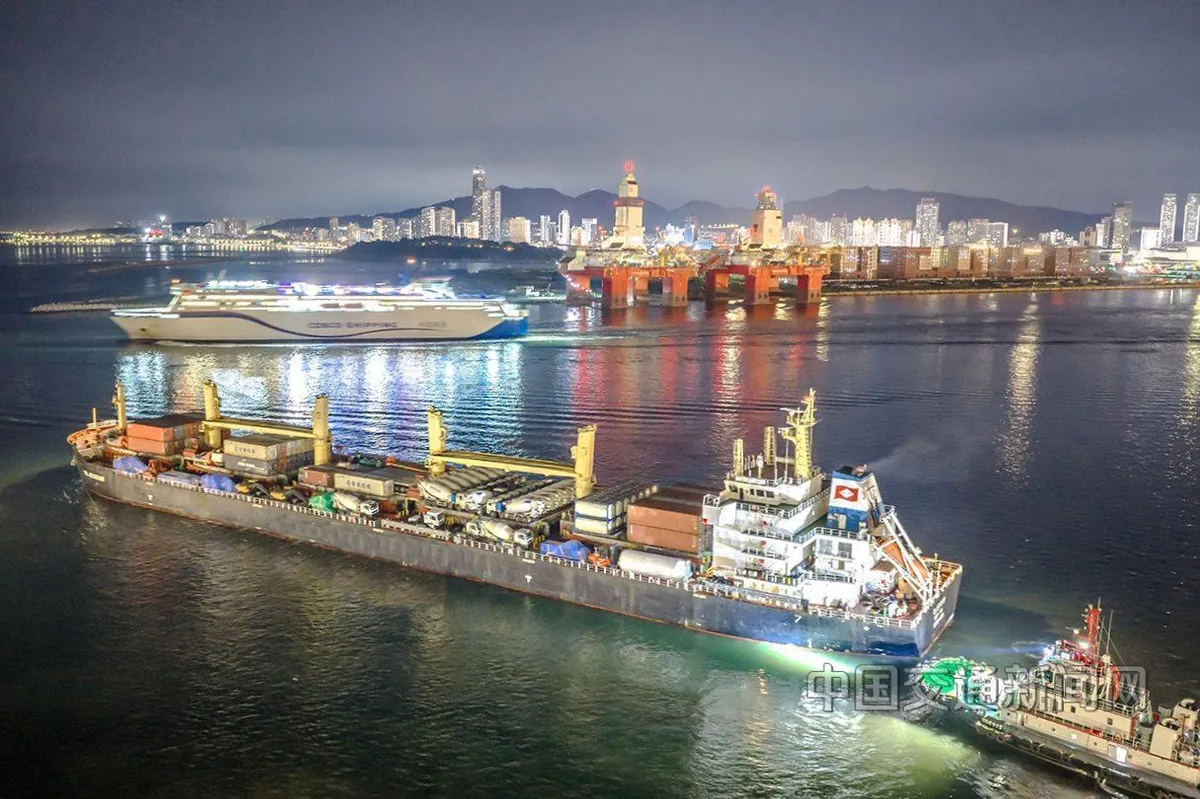
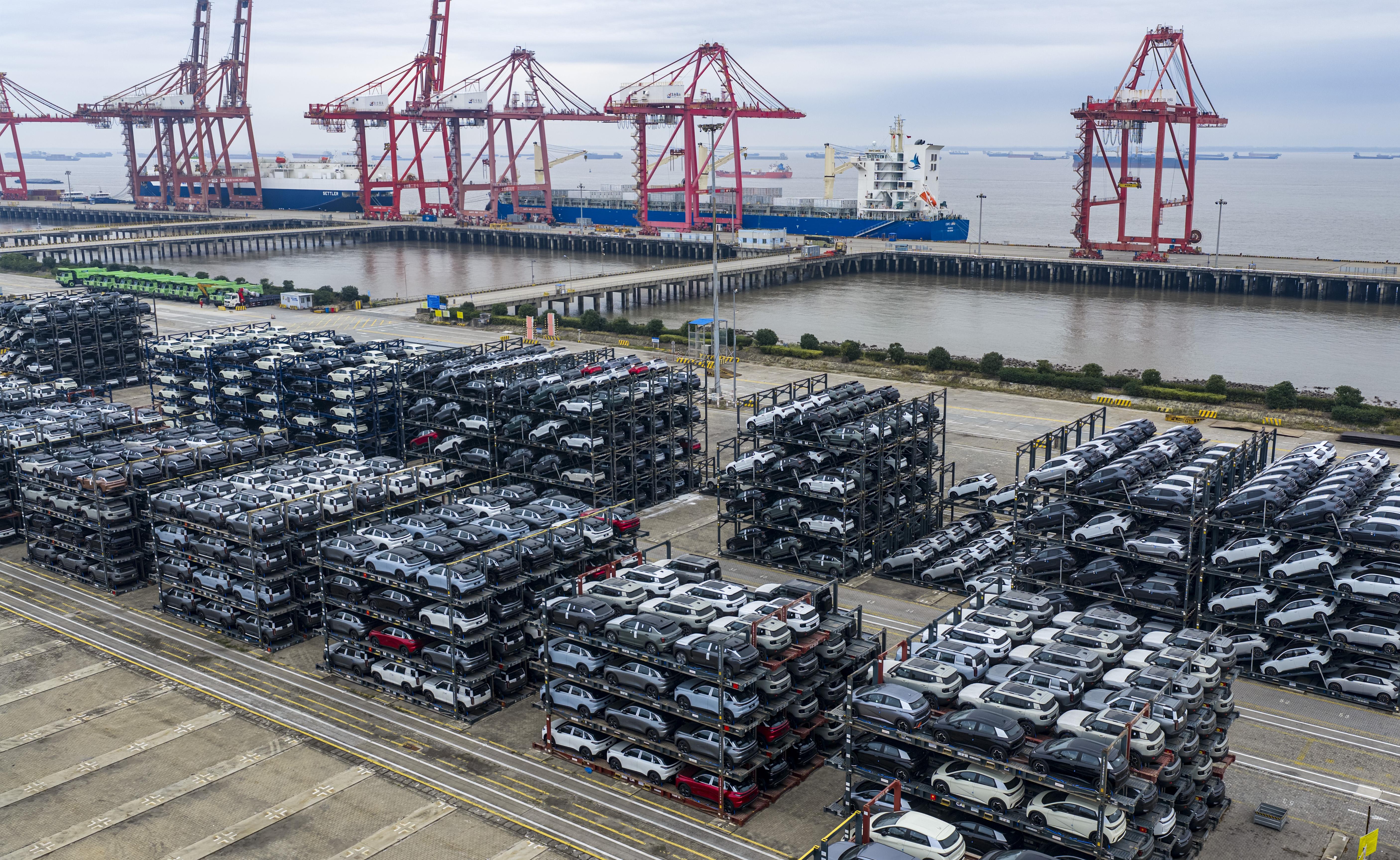
On the same day, at the Taicang International Container Terminal near the Haitong Terminal, COSCO Shipping’s vessel "Libra" loaded over 2,800 commercial vehicles in a foldable frame mode, set to be shipped to Spain and Italy.
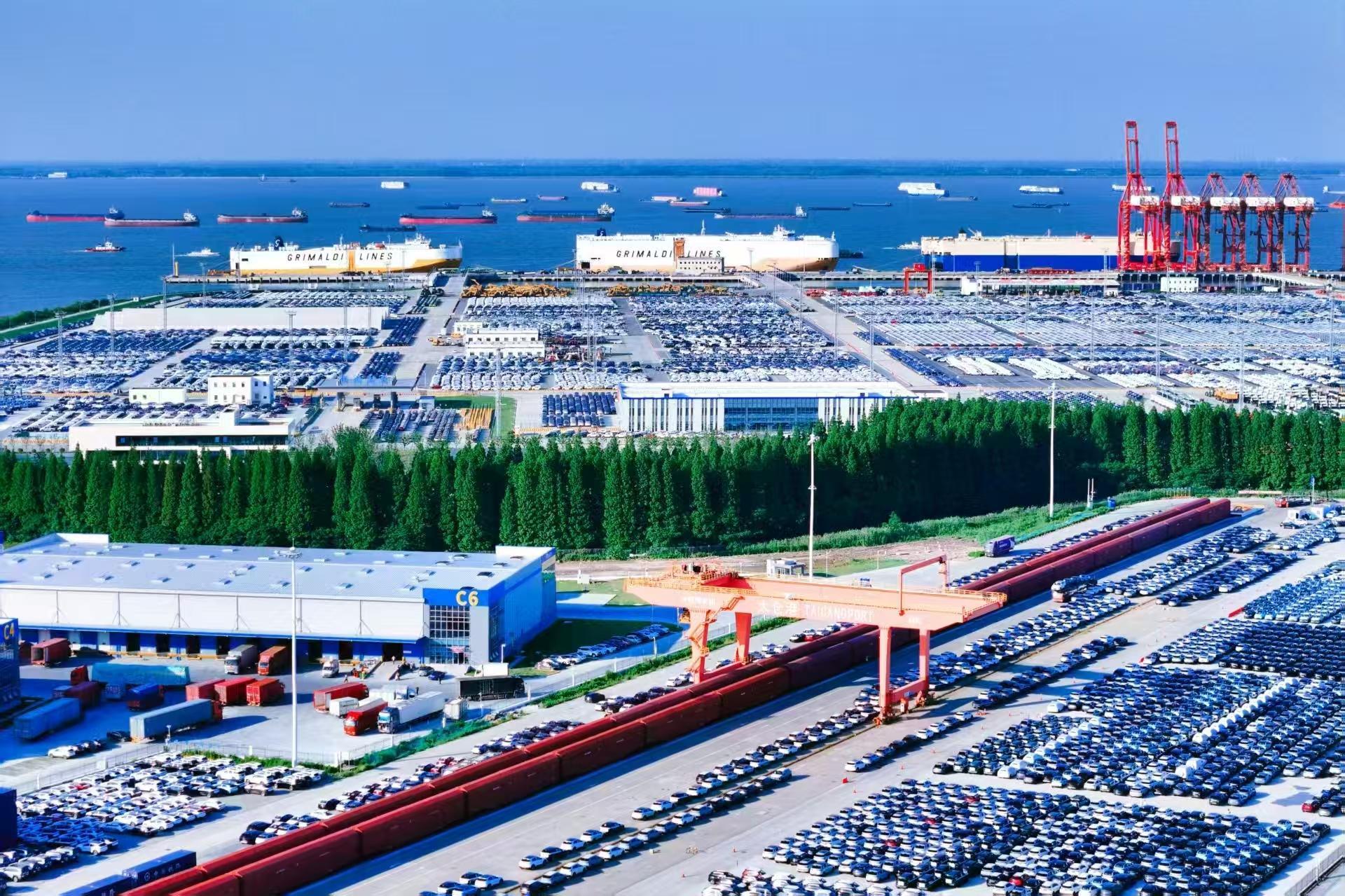
Behind the multimodal vehicle export models, innovation in equipment is injecting new momentum for increased efficiency.
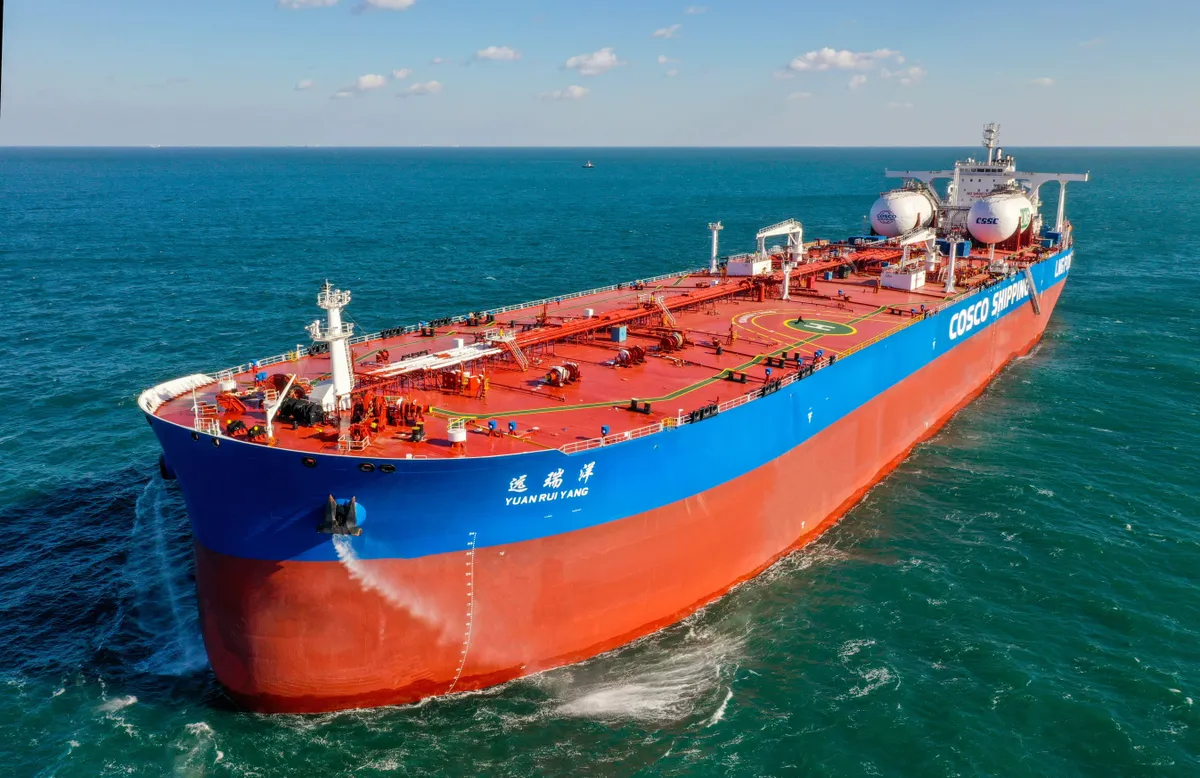
Take the pulp carrier as an example. Leveraging COSCO Shipping’s specially designed foldable vehicle-specific frames, commercial vehicles can be securely fixed and then hoisted into the cargo hold like containers. On the return trip, the frames can be folded and stacked, reducing space usage. This creates a "two-way cargo structure" where cars are transported during the outbound trip, and pulp is carried on the return trip. From January to September this year, a total of 63,000 vehicles were shipped via this model, significantly improving turnover efficiency and space utilization at the terminal.
The container model has also proven to be a breakthrough. Recently, the COSCO Shipping Chery Automobile Export Project from Taicang Port to Europe was successfully completed. A total of 13,052 vehicles were shipped in three batches, with each batch equating to the capacity of a mid-sized car carrier with 4,000 vehicle slots. This set a record for automobile transportation in East China. These Chery vehicles were gathered at Taicang Port from various locations, loaded into containers, delivered to the port, and finally transported by container ships and multipurpose ships to Europe. This was not only a transoceanic shipping endeavor but also an innovative logistics practice that broke with tradition.
COSCO Shipping Container Lines’ Shanghai branch quickly formed a joint task force. From container allocation and space guarantees to connecting terminals, transport fleets, ship operators, and manufacturers, they streamlined the entire chain of vehicle assembly, containerization, port delivery, and shipping, creating a new export channel for automakers.
From traditional roll-on/roll-off ships to innovative container models, from foldable vehicle frames to comprehensive port chain assurance, Taicang Port is addressing the "container shortage" challenge for vehicle exports with a "multi-channel and multi-mode" approach, showcasing both the speed and breadth of "Made in China" expanding worldwide.
Optimizing Full-Chain, Full-Cycle Services
Reducing costs and increasing efficiency is Taicang Port's most practical promise for supporting automobile exports. By providing full-chain and full-cycle services, Taicang Port saves time and lowers costs, helping Chinese enterprises gain real competitive advantages in overseas markets.
The Taicang Port Authority has accurately matched companies’ and terminals’ needs, working together with customs, maritime, border control, and other port entities to establish a dedicated vehicle export task force, set up specialized service windows for vehicle exports, and fully implement "appointment-based" and "online" processing models.
Considering the characteristics of dense export batches and high delivery timeliness for vehicles, the port authority guides enterprises in tracking the real-time progress of vehicle assembly at ports and loading onto ships. A "fast track" for vehicle exports has been opened, with over 40,000 square meters of additional vehicle storage space added, continually enhancing the port’s capacity. Border inspection timeframes have been extended to ensure ships can "load immediately upon docking."
Advanced equipment is also boosting the efficiency of vehicle exports. The port employs police drones, unmanned patrol vehicles, and undercarriage inspection systems, implementing an "advance inspection, batch loading" model, which has helped companies improve loading efficiency by over 20%.
The Yangtze River Basin's Automotive Industry Hub is Emerging
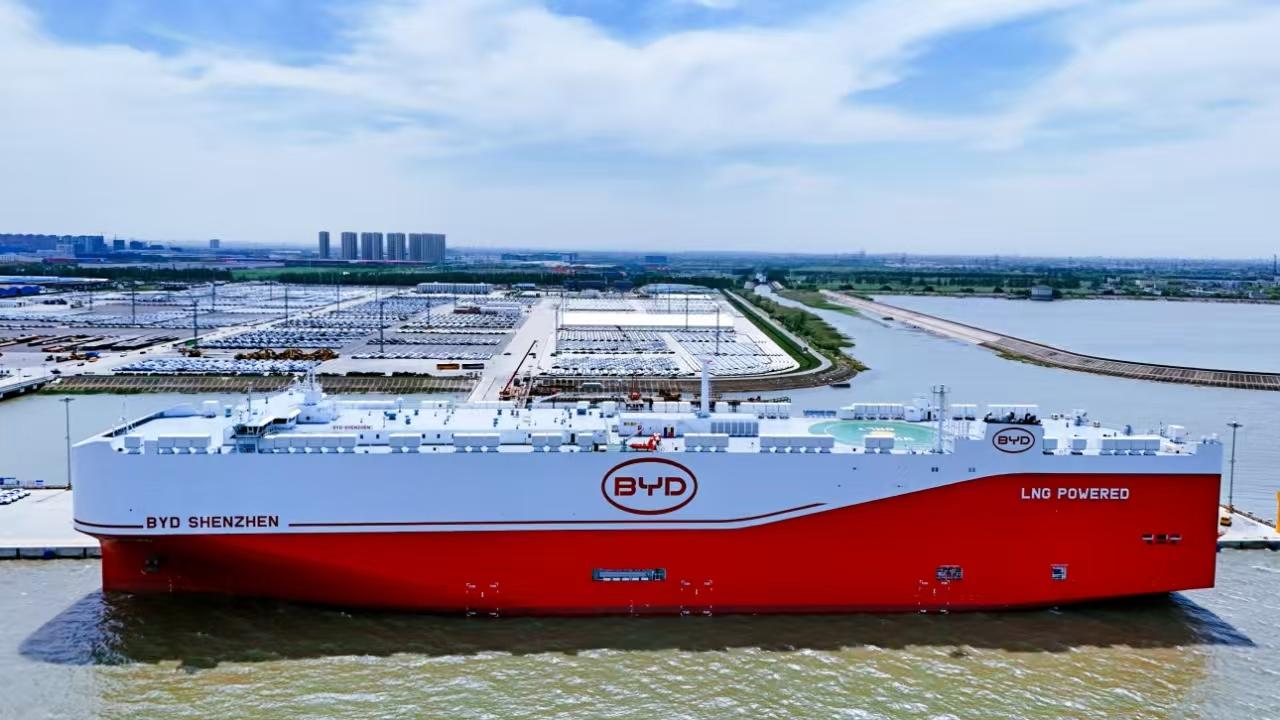
Every ship and every car is connected to a complete industrial chain and supply chain. The continuous increase in vehicle exports is driving Taicang Port from being a "logistics port" to a "trade port" and then a "manufacturing-and-trade port."
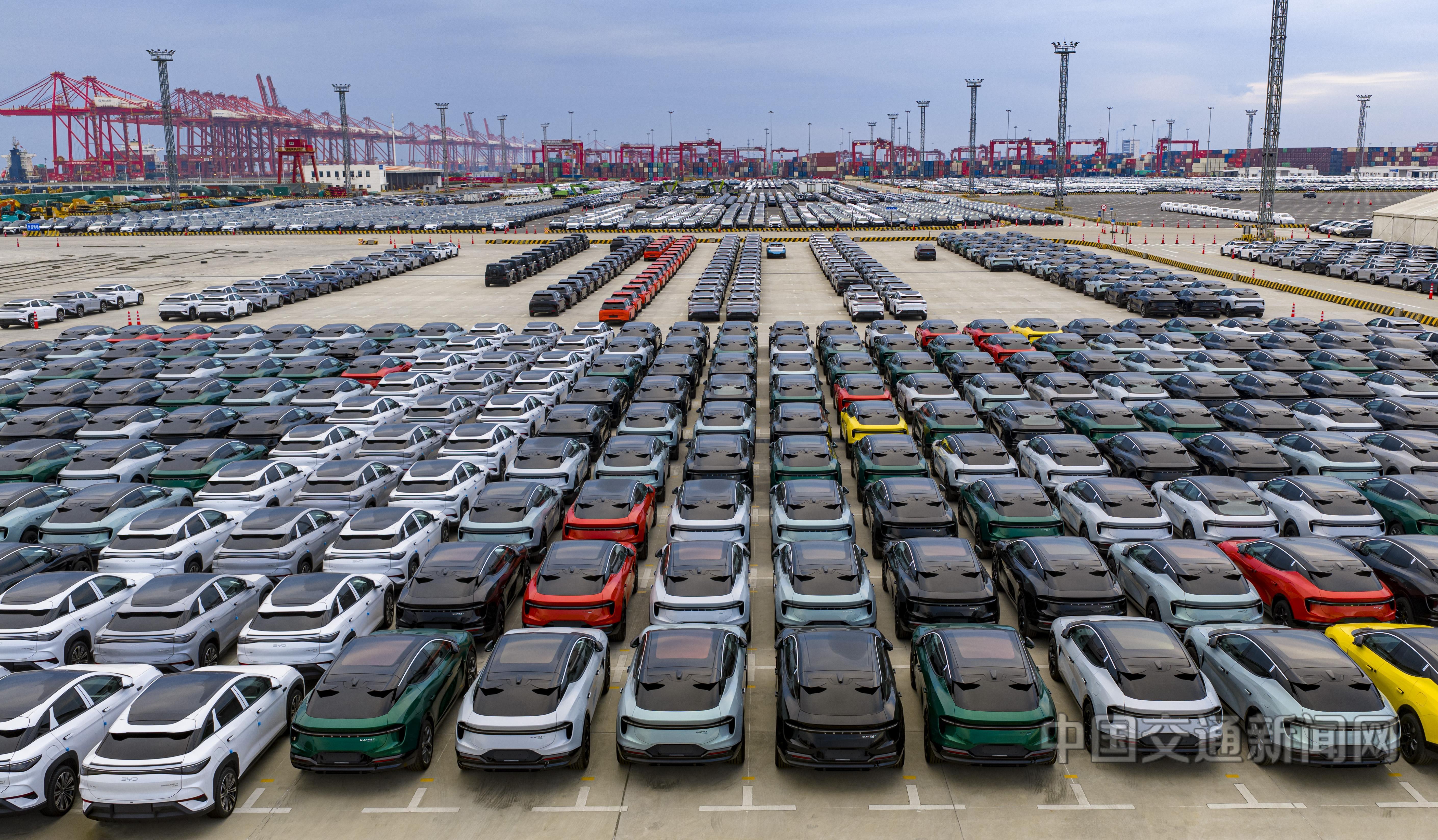
Relying on the hub function of river-sea intermodal transport and water-to-water transfer, automakers along the Yangtze River share the export gateway, reducing costs and increasing efficiency for vehicle production. At the same time, this strengthens the port's cargo hinterland. With advantageous cargo categories such as complete vehicles and auto parts, Taicang Port is enhancing the cluster effect of specialty import and export business, steadily growing into a hub for trade and resource allocation in the Yangtze River automotive industry.
For local manufacturers of vehicles and auto parts, the "port at their doorstep" shortens export cycles, reduces overall costs, and accelerates market responsiveness. This tangibly helps local companies expand into overseas markets and engage in international competition. With logistics and trade, trade and manufacturing, and industry and ports all deeply interconnected, an open economic hub centered around the port is rapidly taking shape.
-
Suzhou Port's Taicang Port area sees a continuous rise in automobile export volumes, with 1 million vehicles driving to the world from here.4477
-
Thrive by the water, strive for innovation and strength; accelerate the construction of a world-class engineering consultancy company.4153
-
Aggregating Industry Wisdom to Protect Seafarers' Rights—Seminar on the "2026 Global Seafarer Health and Rights Blue Book" Held3106
-
钱凯港:促进经济民生的合作共赢港口4438
-
经略深蓝 航保先行——青岛航标处服务区域海洋经济行稳致远3375