"Chinese standards" become the "world language"
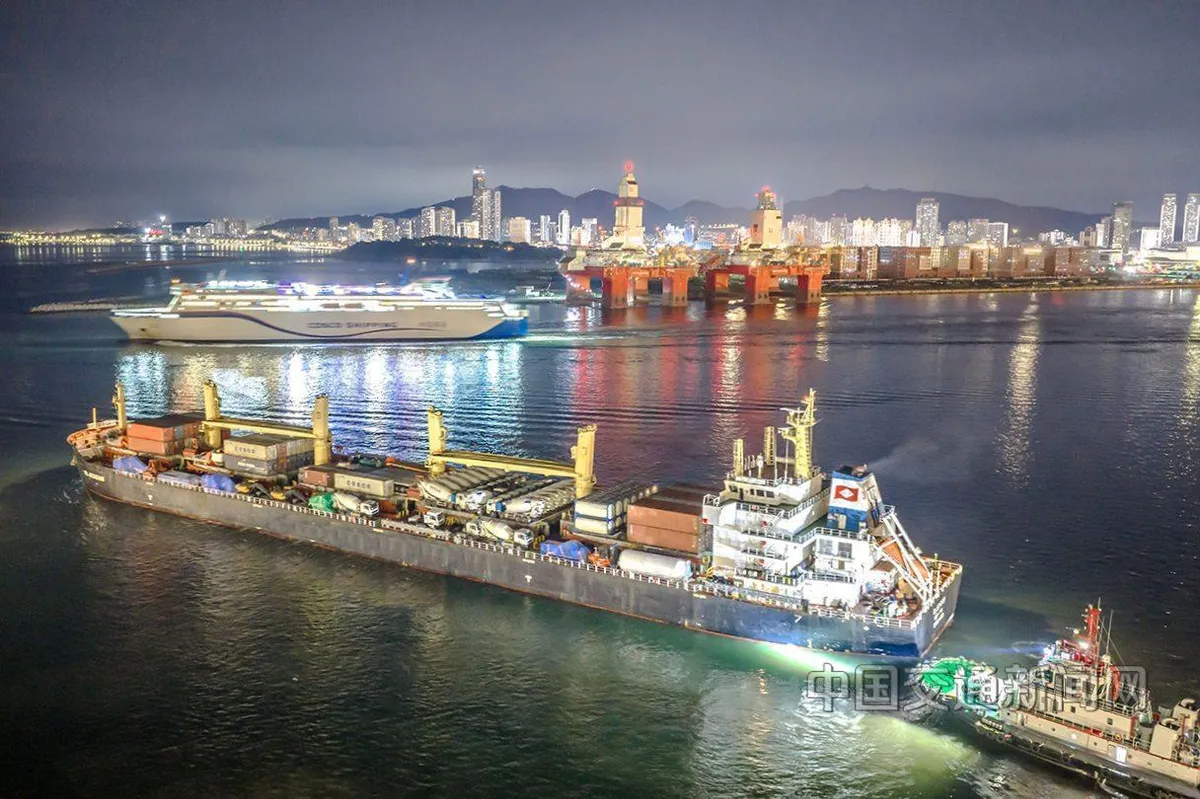
In the early morning at Shanghai Port, the international roll-on/roll-off transport ship "Arctic Tern" was conducting a 2,824-ton green methanol "ship-to-ship" refueling operation. The green methanol being refueled was entirely produced by Shanghai's local 100,000-ton green methanol project, marking the realization of a full industrial chain loop for "Shanghai-produced and Shanghai-refueled" green methanol. This milestone is significant for green fuel refueling at Shanghai Port and injects strong green momentum into the construction of Shanghai as an international shipping center.
The "green identity card" behind this record-breaking refueling operation—the Sustainable Transport Fuel Assessment Framework (GSTC Framework)—was spearheaded and released by the China International Sustainable Transport Innovation and Knowledge Center (International Center). In recent years, the International Center has been deeply implementing the work deployment of the Ministry of Transport, focusing on the requirements of green transformation, promoting the establishment of an international certification system for green marine fuels in China, and helping "Chinese standards" become the "world language."
Filling the Gap in Standards for Green Marine Fuels
Where green marine fuels come from, how much emissions they reduce, and where they flow have become key issues of concern for stakeholders in the shipping industry in recent years. The GSTC Framework, centered on a lifecycle assessment system for green marine fuels, not only references internationally accepted practices but also closely aligns with the realities of China's industries. It establishes a multidimensional evaluation framework covering resource sustainability, greenhouse gas reduction, traceability, and environmental and social impacts, filling the gap in industry standards and achieving a breakthrough from 0 to 1.
Currently, with diverse green shipping technology pathways, numerous industry players, and varying rules and standards, there is a need to build consensus through openness and inclusivity and to promote cooperation through exchange and mutual learning. What the GSTC Framework does is transform complex industry practices into rules and languages that all parties can understand, calculate, and verify, contributing a Chinese solution to the green and low-carbon transition of international shipping.
Pioneering Full-Chain Trials
Since the release of the GSTC Framework, the International Center has adhered to the principles of simultaneous construction, application, and improvement. It has conducted pioneering trials across all links of the full chain, including production, transportation, storage, and refueling. These trials cover different technological pathways and production processes for mainstream green fuels such as green methanol and green ammonia, while also taking into account regional characteristics such as the Northeast production base and the East China shipping hub, ensuring the scientific and representative nature of the certification system.
Hong Kong and China Gas Company Limited uses "co-gasification" technology to produce green methanol from waste materials such as used tires. China Energy Engineering Group generates green hydrogen using renewable energy sources like wind and solar power, which is then synthesized into green ammonia, forming the world's largest integrated green hydrogen-ammonia-methanol project. The 100,000-ton green methanol project jointly undertaken by Shenergy Group Co., Ltd., Shanghai Urban Investment (Group) Corporation, and Shanghai Huayi Holding Group Co., Ltd. has established a full-chain green methanol supply system encompassing "production-trade-storage-refueling." Each project reserve and test operation accumulates valuable practical experience.
Serving the Construction of Shanghai and Hong Kong International Shipping Centers
To serve the high-quality development of China's shipping industry and accelerate the green and low-carbon transition, the International Center has reached multiple cooperation agreements with organizations such as the Shanghai Municipal Transportation Commission and the Hong Kong Transport and Logistics Bureau to expand the application of the GSTC Framework, actively supporting the construction of international shipping centers in Shanghai and Hong Kong.
In June, the International Center, together with the Shanghai Municipal Transportation Commission, Shanghai Maritime Safety Administration, Shanghai Hongkou District Government, and Shanghai Clearing House, launched a cooperation agreement in Shanghai to jointly build a "Green Marine Fuel International Certification System Affairs Center," creating a regional professional service platform for international certification of green marine fuels. In August, the International Center held in-depth discussions with the Hong Kong Transport and Logistics Bureau, encouraging more Hong Kong enterprises to adopt the GSTC Framework.
Next, the International Center will continue to leverage its platform role, working with all parties to promote the construction of the international certification system for green marine fuels, contributing to the green and low-carbon transition of international shipping and accelerating the building of a strong transportation nation.
-
China has established a new channel in the southwestern region connecting inland areas to the sea.3159
-
China Merchants Group's intelligent ships make new moves.4493
-
The 9th International Diving and Offshore Exhibition Opens in Qingdao This November4929
-
The nation's first emergency drill for a biofuel spill was held at Tangshan's Jingtang Port.3430
-
Trillion-dollar market accelerating into shape! What can an "energy island" change?3643