The 'Huayuan 668' shipwreck salvage was successful, clearing a navigational obstacle that lasted twelve years.
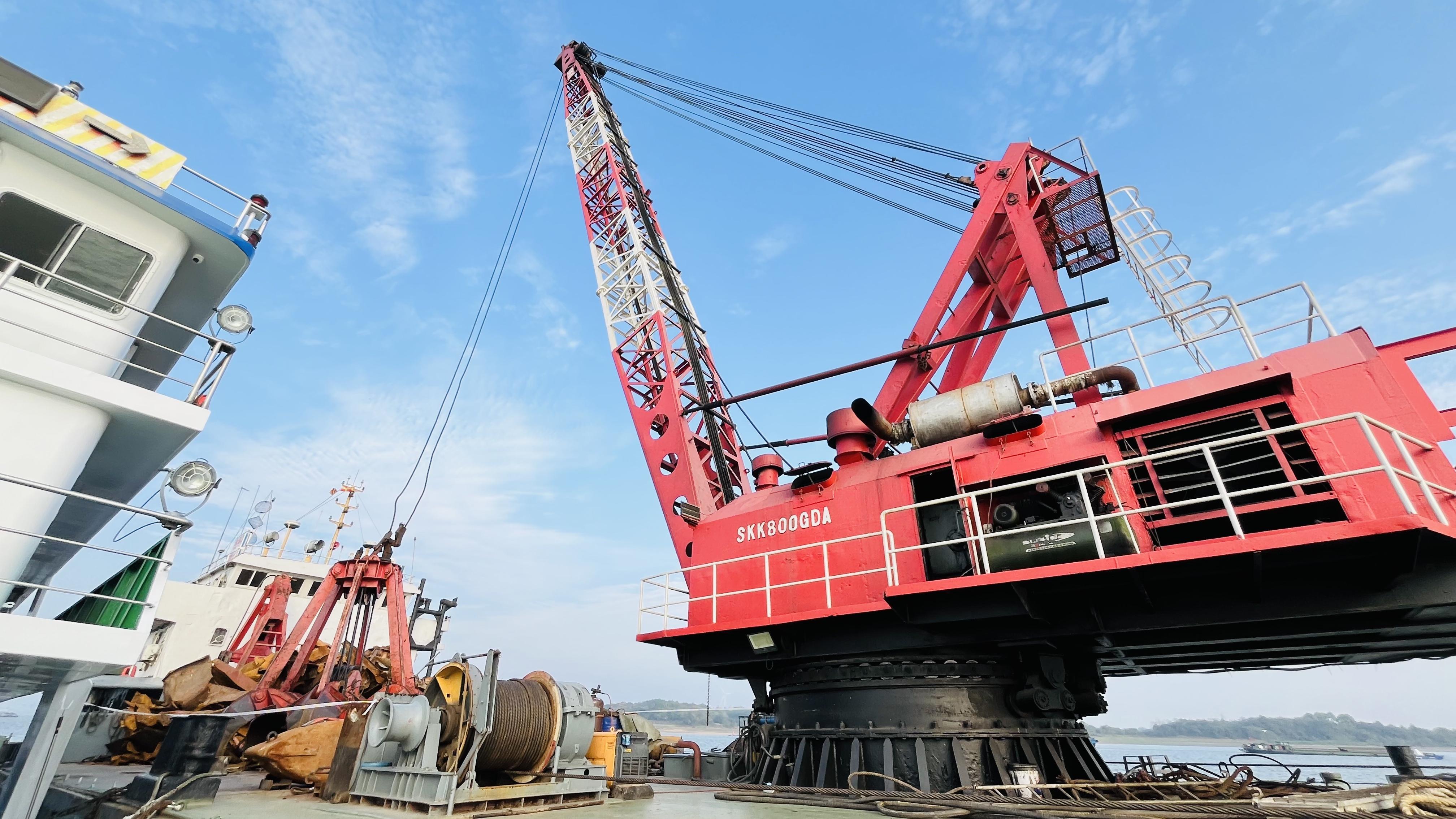
The river breeze brushes through, and the surface of the waterway at Taizi Ji in Anqing glimmers as several workboats slice through the waves. Accompanied by the muffled roar of the grab dredger, the 20-ton plum blossom grab repeatedly dives into the murky depths of the river, slowly lifting the wreckage of a sunken ship that has been resting on the riverbed for twelve years to the surface.
On November 6, the much-anticipated "Huayuan 668" shipwreck salvage project, organized by the Yangtze River Nanjing Water Emergency Rescue Base of the Yangtze River Nanjing Navigation Bureau, entered a critical phase. This is not merely a "submarine hazard clearance battle" to eliminate navigation risks in the Yangtze River's golden waterway, but also a groundbreaking action to restore the Yangtze River's environment and practice green development.
A Hardcore "Hazard Clearance Battle"
Rewind to June 9, 2014, the "Huayuan 668," carrying 2,400 tons of yellow sand, collided with the "Guangtong 1166" on its downstream journey. It capsized and sank 130 meters outside the 268th white buoy in the Taizi Ji Waterway of Anqing.
"The Taizi Ji Waterway is an important navigation zone in the lower reaches of the Yangtze River, with about 800 ships passing through daily, meaning the traffic density is extremely high," explained the head of the Yangtze River Nanjing Water Emergency Rescue Base. The wreck is located over 100 meters outside the waterway, and the ship's body lies at approximately a 90-degree angle to the water flow. Much of the bow, the left side, and the stern have been severely silted, and even cracks have appeared in the middle section of the right side. The curved nature of the river channel near the wreck and its proximity to the main channel limit route adjustments and pose navigation safety threats to vessels traveling along slow currents during the dry season.
For 12 years, the wreck and its associated hazards to navigation have persisted. The process of salvaging and disposal has required repeated assessments, thorough examinations, and the gradual maturation of conditions. During this time, the Yangtze River Nanjing Water Emergency Rescue Base organized three scans of the wreck: a multibeam full-coverage survey in October 2023, underwater diver inspections in October 2025, and side-scan sonar investigations in March 2026. Though these scans clarified the state of the wreck each time, they also revealed worsening silt accumulation. By the time salvage operations began in 2026, the wreck was essentially fully buried. The intensification of siltation posed a significant threat to the safety of passing ships. Additionally, residual oil and heavy metal contaminants in the wreck presented constant environmental risks. Removing this "hidden reef" from the riverbed became an urgent necessity.
Fragmentation Salvage: "Dissecting an Ox"
Faced with a wreck that was nearly completely buried and had a fractured structure, the traditional method of retrieving it as a whole was no longer feasible. Fragmentation salvage became the only option. On August 30, following expert review, the fragmentation salvage plan was finalized. With the acquisition of construction permits on October 22, formal salvage operations began.
Throughout the salvage, precise "dissection" operations were performed daily. The construction team first utilized multibeam echo sounders to carry out accurate surveys of depth, substrate, and the wreck’s specific orientation. In the meantime, patrol vessels were deployed to uphold navigational order during operations.
Before construction began, the team pre-laid oil containment booms and deployed oil absorbent pads to strictly prevent any potential oil spill from the wreck. Following this, a DOP pump was engaged to clear mud and sand around the wreck, creating a safe working zone for follow-up fragmentation operations.
The toughest "battle" came during the fragmentation salvage stage. The hydraulic breakers and grabs on the grab dredgers alternated their efforts: breakers worked by consistently dropping from a height to fragment the ship into pieces, and grabs subsequently transferred the wreck fragments onto barges. The site supervisor explained that the project is being carried out steadily according to a scientific process of "survey, probe, pollution control and dredging, demolition and removal." Steps include fragmentation of the ship structure with breakers, transferring of debris by grabs, onward transportation, and final surveys upon project completion, all aimed at ensuring the efficiency and safety of salvaging operations. The project progress has reached 60%, and by November 5, over 100 tons of shipwreck debris and approximately 8,000 cubic meters of silt had been removed from the site.
40-Day Countdown for the Final Push
The salvage of the sunken ship is not only for navigation safety but also for restoring the ecological balance of the Yangtze River. With fragmentation and salvage progressing, subsequent phases, including transport, surveys, and acceptance tests, are already on the schedule, pushing the project into its final countdown.
This salvage operation is not just a "hazard clearance battle" against time but also a "coordinated campaign" bringing together efforts from multiple parties. Confronted with a series of complex challenges during the planning from early in the year to on-site construction in late October, various organizations such as the Yangtze River Navigation Bureau, the Yangtze River Nanjing Water Emergency Rescue Base, the Wuhan Yangtze River Navigation Rescue and Salvage Bureau, the Yangtze Wuhu Navigation Bureau, and the Anqing Maritime Bureau worked together in full coordination to tackle obstacles.
Once this "hidden reef" under the river is fully removed, the channel will become safer and smoother for navigation. The removal and disposal of the "Huayuan 668" vividly illustrates the broader commitment to protecting the Yangtze River.
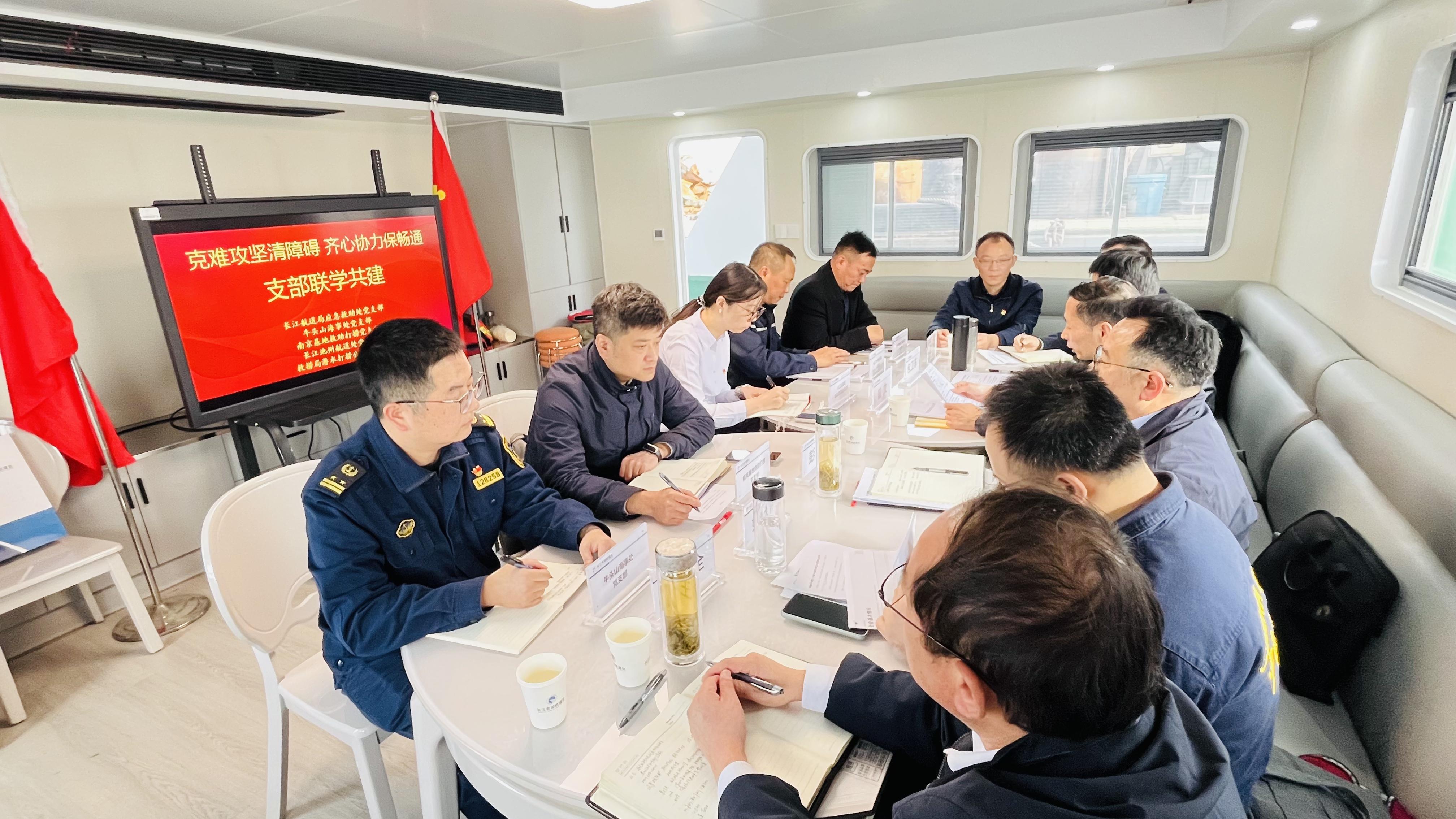
On November 6, the Yangtze River Navigation Bureau Emergency Rescue Section Party Branch, together with the Niutou Mountain Maritime Office Party Branch, Nanjing Rescue Base Salvage and Rescue Party Branch, Yangtze Chizhou Navigation Bureau Party Branch, and the Salvage Bureau's Diving and Salvage Company Party Branch, organized a joint Party study and building activity under the theme "Overcome Challenges to Remove Obstacles, Work Together to Ensure Smooth Navigation."
On-site, after renewing their Party membership oath, Party representatives engaged in in-depth discussions centered on the theme "Overcome Challenges to Remove Obstacles, Work Together to Ensure Smooth Navigation." Relevant leaders emphasized drawing on the spirit of perseverance from the Party's latest theories and the Long March spirit to tackle difficulties, leveraging Party member "challenge task groups" to promote the deep integration of Party building with operations. They committed to strengthening work fortifications, showcasing Party member identities, and solidifying a "unified team" mentality to balance construction and navigation management, thereby minimizing the project's impact on Yangtze River navigation. This joint Party study and building session brought political learning sessions to the forefront of challenge-solving efforts, locating the thematic Party day amid the turbulent river and bustling construction site. It vividly demonstrated the deep integration of "Party building + operations," injecting a powerful red impetus into this battle against waves and silt.
-
The 'Huayuan 668' shipwreck salvage was successful, clearing a navigational obstacle that lasted twelve years.3052
-
Cold wave and low water levels overlap, ensuring uninterrupted transportation of essential goods in the Jiangyin section of the Yangtze River.3142
-
Passing on craftsmanship and shouldering the mission! "People's Craftsman" Xu Zhenchao visits the Yantai Salvage Bureau to promote the spirit of craftsmanship.4320
-
From Experienced Operations to Efficient Intelligence: Dalian Port Pilot Station Embarks on a New Journey After 75 Years4121
-
View the canal from the water, witness Guangxi's new maritime development.4372